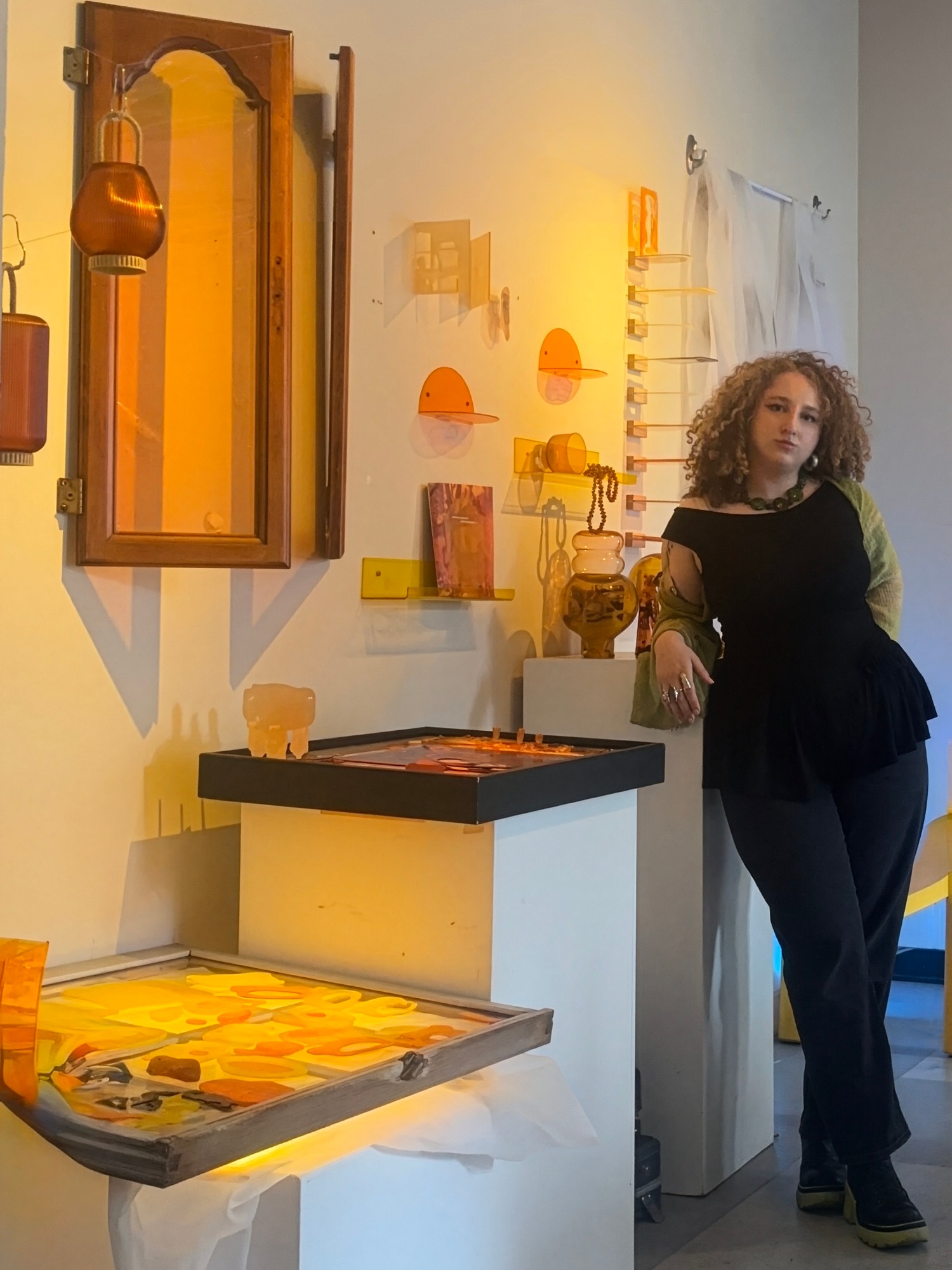
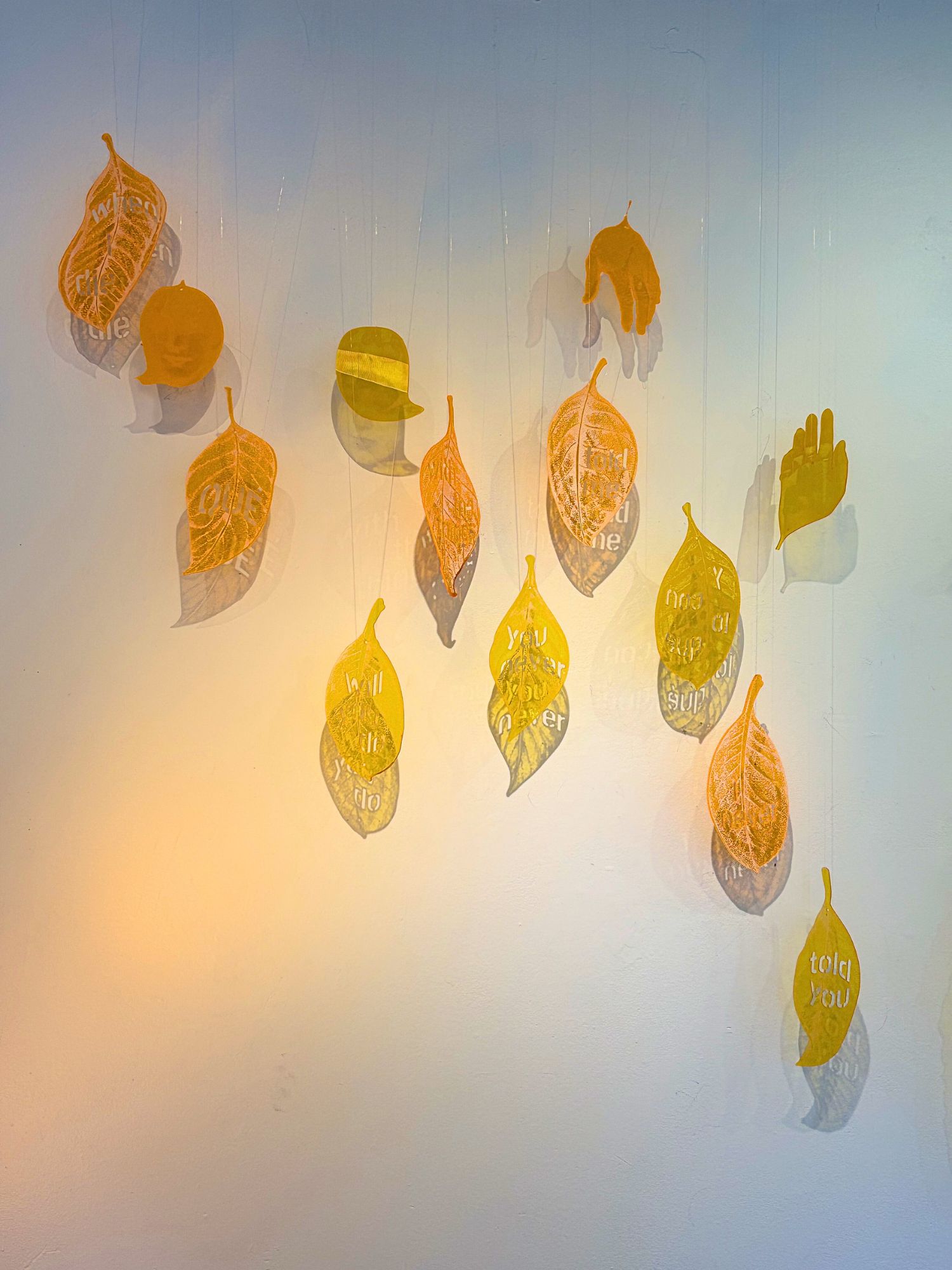
RelicQUÉ is a speculative intergenerational installation built from years of active intellectual and emotional posthumous dialogue with my late grandmother, Matilde Saffier Salganicoff — a Jewish poet and psychiatrist born in Buenos Aires to a family who fled Ukraine, before immigrating to Philadelphia following the many fascist convulsions in Argentina’s mid-century history. The work is anchored by a question she posed in 1974: “When I die, what will you do with the things you never told me, with everything you didn’t hear, with the things I never told you. I have spent years inside that question.” This installation is my answer.
Amber is the installation’s material logic and its metaphor. I inherited Bakelite amber from Matilde, and what makes it meaningful is not geological purity but touch, wear, and survival. Amber is pine resin; Matilde’s ashes were scattered at a pine tree, and at the magnolia in her backyard that I can no longer visit. Synthetic acrylic, laser-cut and lit from behind, becomes a parallel time material, holding one era inside another the way fossilized resin holds ancient life. Light passing through synthetic amber produces memory through distortion. Shadows become more present than objects. The ancestral glows, fades, and persists. You become a vessel, a conduit, a keeper of memory.
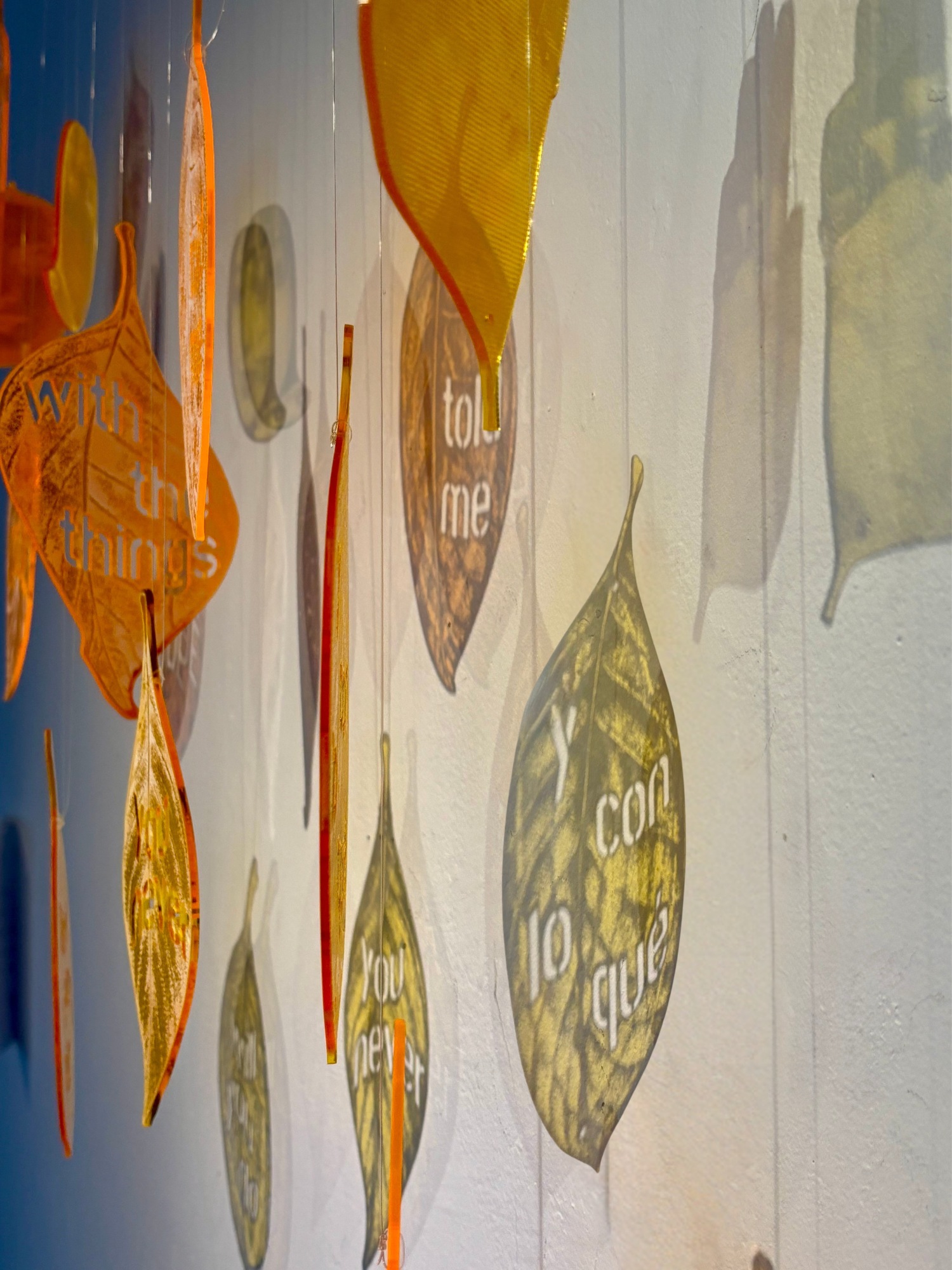
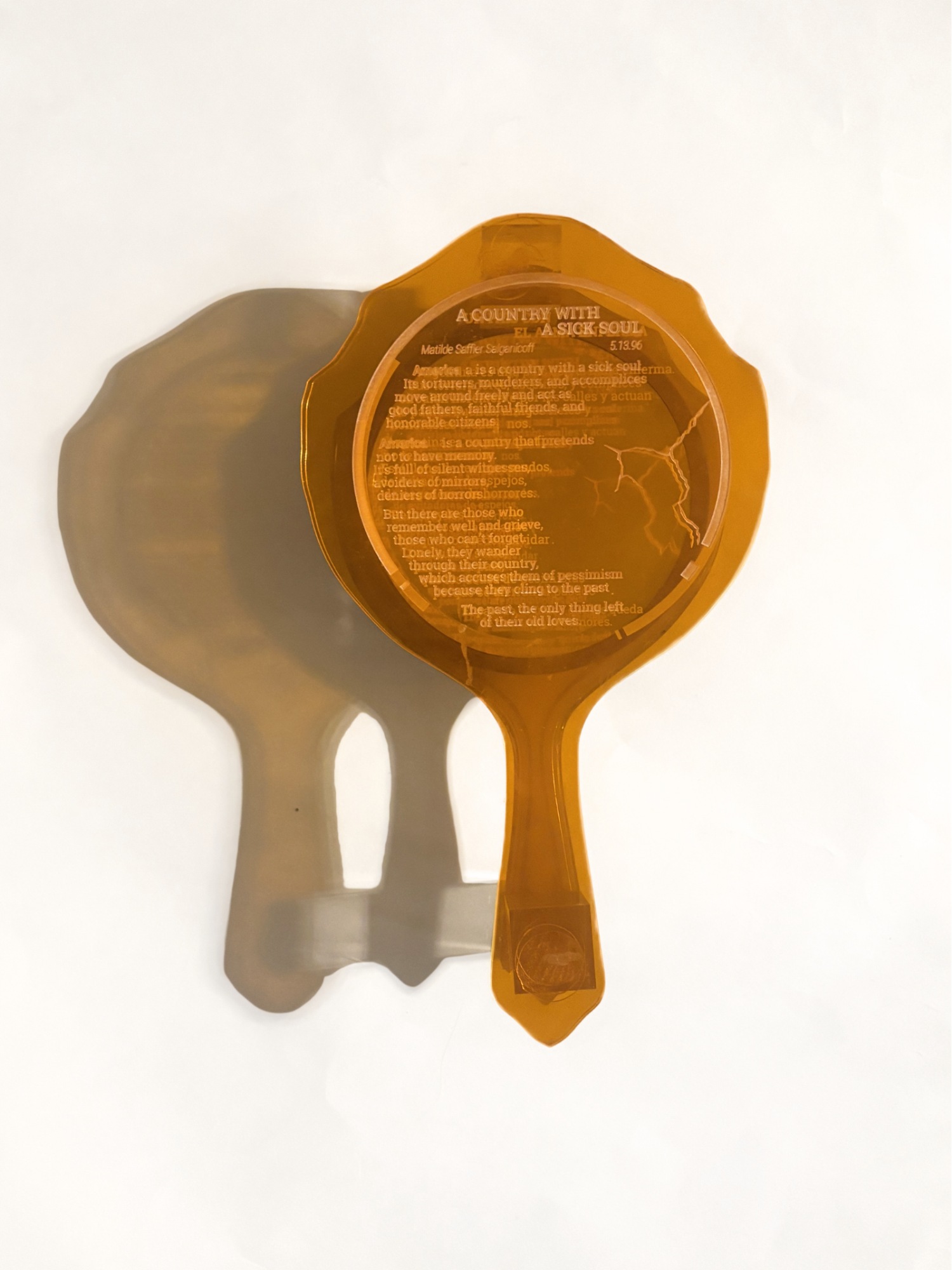
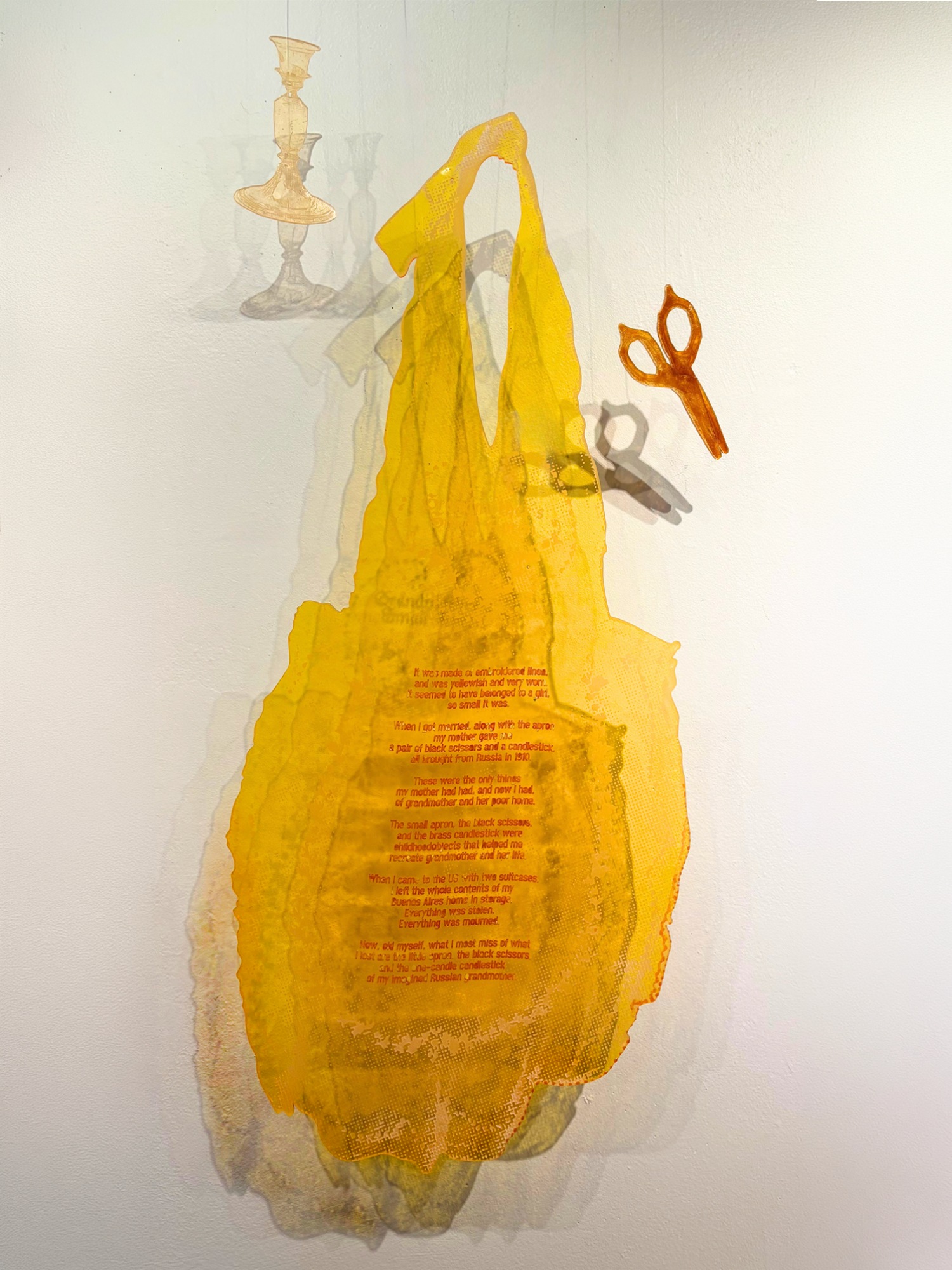
The installation moves left to right through accumulating registers of intimacy and interrogation. Immigration testimonials and heirloom jewelry give way to Memorianolia — a conjured mourning site of suspended amber and orange acrylic magnolia leaves carrying bilingual fragments of What Never Happened, casting shadows that outlast the objects themselves. The Grandmother’s Apron Assemblage follows: a found apron sourced by chance at a street market, an almost exact match to the one Matilde describes in her poem, reconstituted alongside laser-cut amber acrylic scissors and candlestick — the objects stolen from storage when she immigrated to the United States, speculated back into existence as an act of repair. Further in, the installation turns interrogative: Lavanderia de Memoria, chiffon pieces printed with AI-generated portraits of my grandmother conjured from my own descriptions and photographs, confronts the limits and violences of machine conjuring as a stand-in for ancestral memory. What does it mean to ask an algorithm to imagine her face, to wash and rewash a memory through a machine that has never grieved? Alongside it, a fabricated acrylic suitcase box spills AI-generated portraits, and Nose Approximation Box interrogates the inherited physiognomy of Jewish identity, the nose as archive of ancestry, of racial marking, of the body as a site where diaspora leaves its traces. Avoider of Mirrors engraves Matilde’s indictment of Argentina’s culture of forgetting onto a hand mirror made illegible as a reflective surface, its text substituting America for Argentina, insisting that the cycle is not past. Her complete works anchor the far end of the space alongside a reading chair, acting as a deliberate space where her poetry exists without my speculation layered over it, and where she gets the last word as a thank you from me.
I am an anti-Zionist Latina Jewish artist working at a moment of acute transnational instability, where divisions and barbaric violence within and outside of my communities are at a fever pitch. This work does not seek resolution. It seeks to hold: to honor the ancestral trousseaus of wisdom rendered invisible by the violent shuffle of displacement, and to insist that the final death a person dies is when someone last utters their name. I keep uttering Matilde’s.