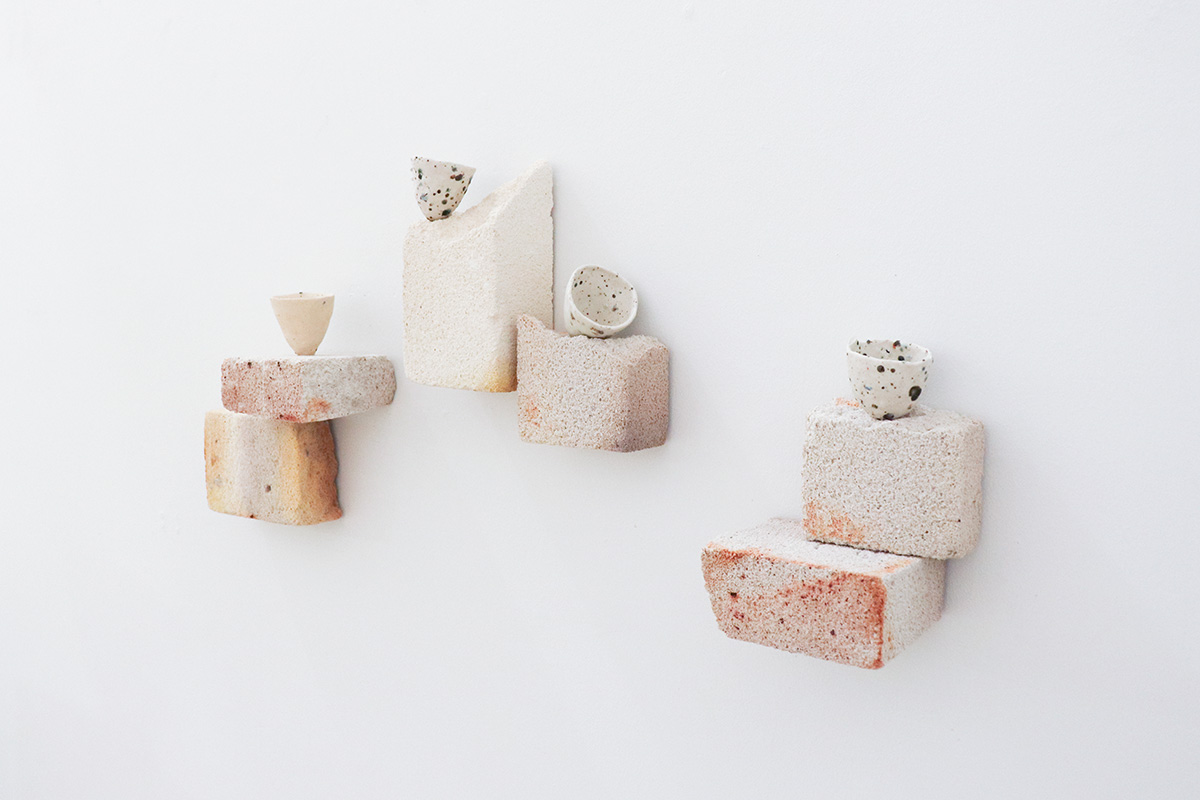
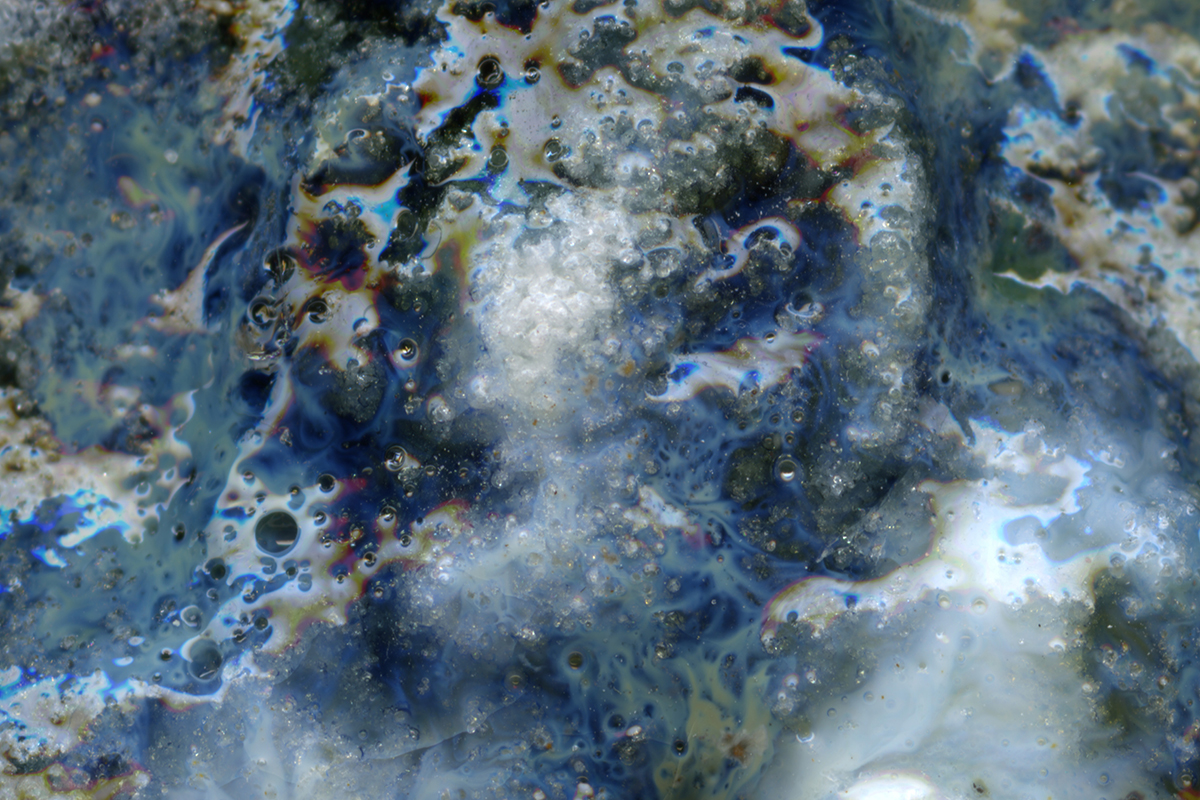
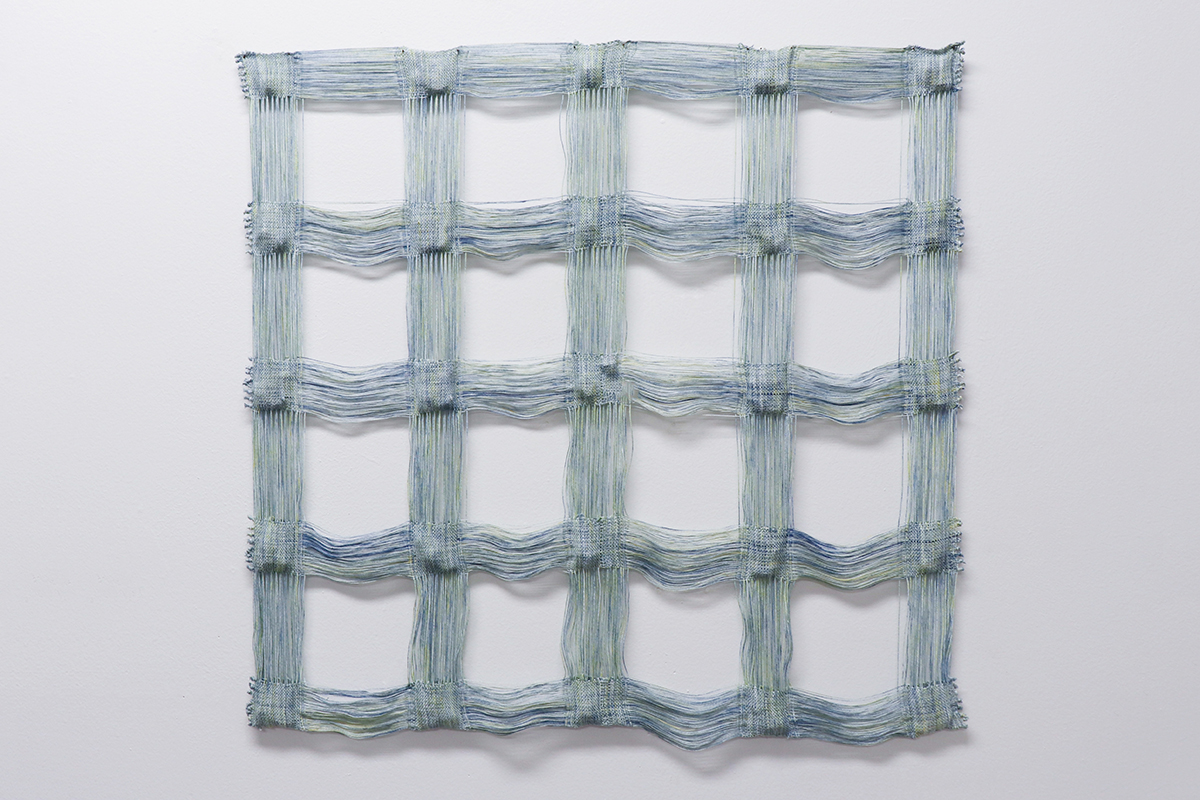
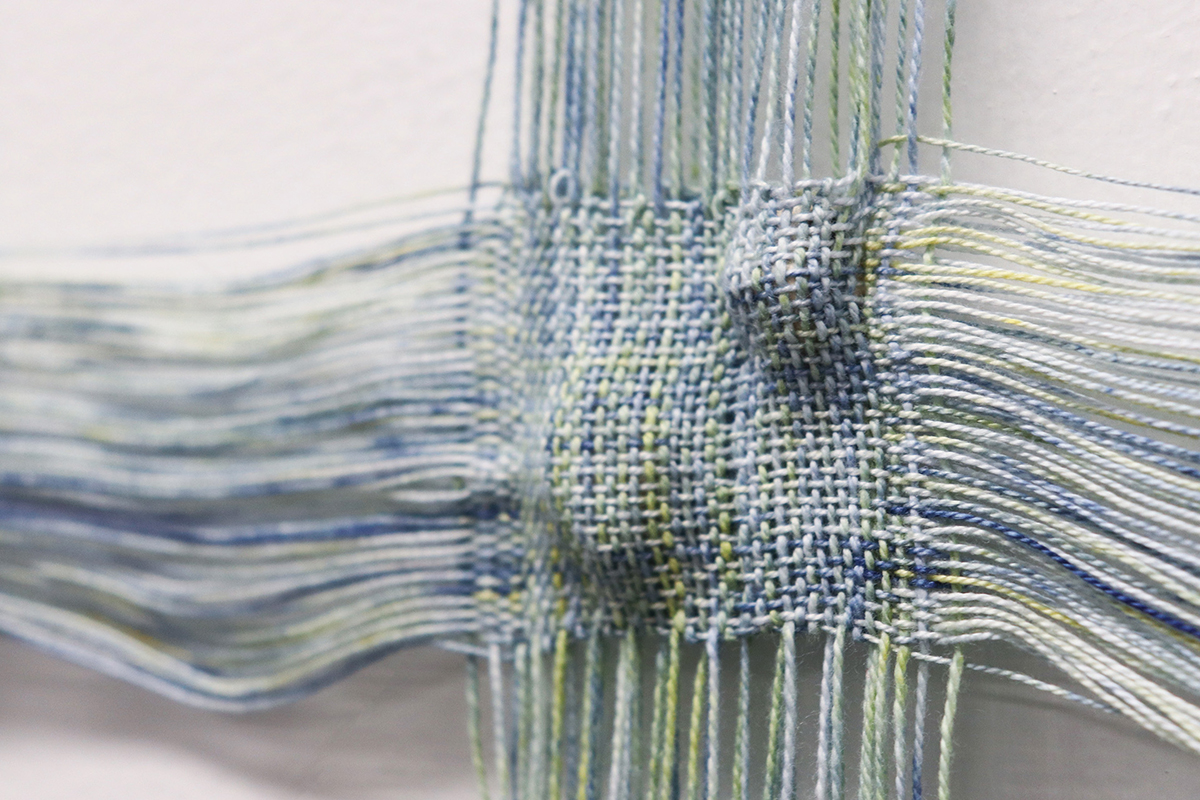
Christina Bohyun Lee works across ceramics, digital images, and textiles. She explores how discarded materials can generate new forms of relationships. The key material in her practice is glaze that other artists have deemed unusable—failed tests, excess mixtures, or materials no longer suitable for their intended purposes. For Lee, these glazes are not worthless waste but substances full of potential to be repurposed and reimagined. She archives the glazes according to her own coded system and transforms them into new material forms.
Once redefined and fired, the glazes become surfaces such as floor tiles, wall installations, and wallpaper-like structures that shape immersive environments. The cracks, bubbles, and irregular patterns that form during firing create visual experience reminiscent of geological or topographic formations. Lee invites the viewers to encounter the moment when overlooked material shifts into a newly imagined landscape.
Lee’s practice centers on a cycle structure in which waste forms new environments, and those environments are subsequently activated by other people. This act of reuse goes beyond a gesture of sustainability. It becomes a metaphor for how communities build and expand themselves through sharing of failures, remnants, and excess. When discarded material is handed to the artist, failure becomes the beginning of the renewal. When viewers step into the constructed environment, they, too, become the next point of departure within this ongoing cycle. Through the connections between material, space, and human presence, Lee’s work reflects on how communities form, transform and expand.